



Can you tile a fireplace for a log burner? Yes, but only if the board, adhesive and grout underneath can cope with the heat. A customer in Sheffield found this out the hard way. They had paid for their fireplace recess to be boarded out, but when the log burner installers arrived, they refused to fit the stove. I was called in as their Sheffield tiler to put it right.
This post walks through what went wrong, how I fixed it, and what to know before you tile a fireplace or hearth for a wood burner. If you’re planning a log burner installation of your own, it could save you a lot of time, money and frustration.
The Problem: Plasterboard Inside a Fireplace Recess
The customer wanted a log burner in their existing fireplace. Before the installers came, they hired someone to board and finish the recess ready for the stove. That person used plasterboard, which is the standard choice for most walls and ceilings in a home, but it is not suitable for a solid fuel stove.
Plasterboard has a paper facing that can burn, and its gypsum core breaks down when it’s exposed to sustained heat. A log burner produces exactly that kind of heat, day after day. When the stove installers arrived, they wouldn’t sign the job off, and they were right not to. The building regulations for solid fuel appliances set out strict rules on what can sit around a stove, and plasterboard doesn’t meet them.
The customer had done nothing unreasonable. It’s an easy mistake to make; they had simply paid for the wrong material. The log burner installation was on hold, the fireplace couldn’t be used, and the boarding had to be redone properly before anything else could happen.
The Fix: Cement Board and Heat-Resistant Adhesive
My brief was straightforward: strip out the plasterboard and replace it with something that would pass.
I removed the plasterboard and prepared the recess, then lined the back and sides with 12mm HardieBacker cement board. Unlike plasterboard, cement board is non-combustible and doesn’t break down under heat, which makes it a much safer base around a stove. It’s also a stable, solid surface for tiles, and that matters because a tiled finish is only ever as good as the surface beneath it. I did the same on the raised hearth, and fixed the boards with a heat-resistant board adhesive so the whole structure could cope with the temperatures.
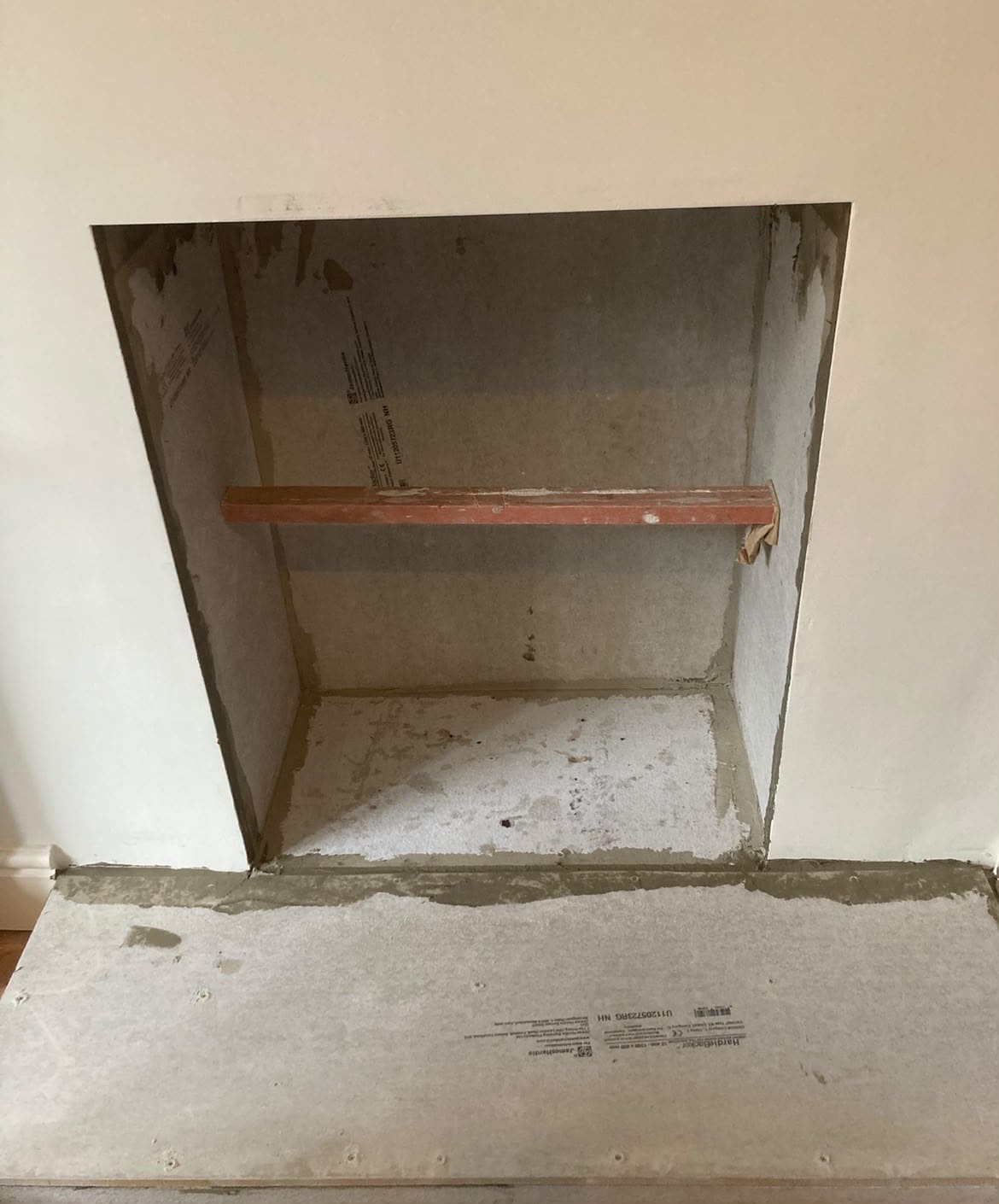
Taking care at this stage pays off later. Boards need to sit tight and flat, with the joints and edges properly finished, so the tiles can go on evenly. Once the recess and hearth were done, the installers had a compliant base to work from, and the log burner installation could finally go ahead.
Can You Tile Inside a Log Burner Fireplace?
Yes, you can tile inside the recess of a log burner fireplace, and it’s one of the best ways to finish it. But it only works if the preparation is right. The tiles are the last thing to go on, and everything beneath them has to be non-combustible and approved by your stove installer before a single tile is fixed.
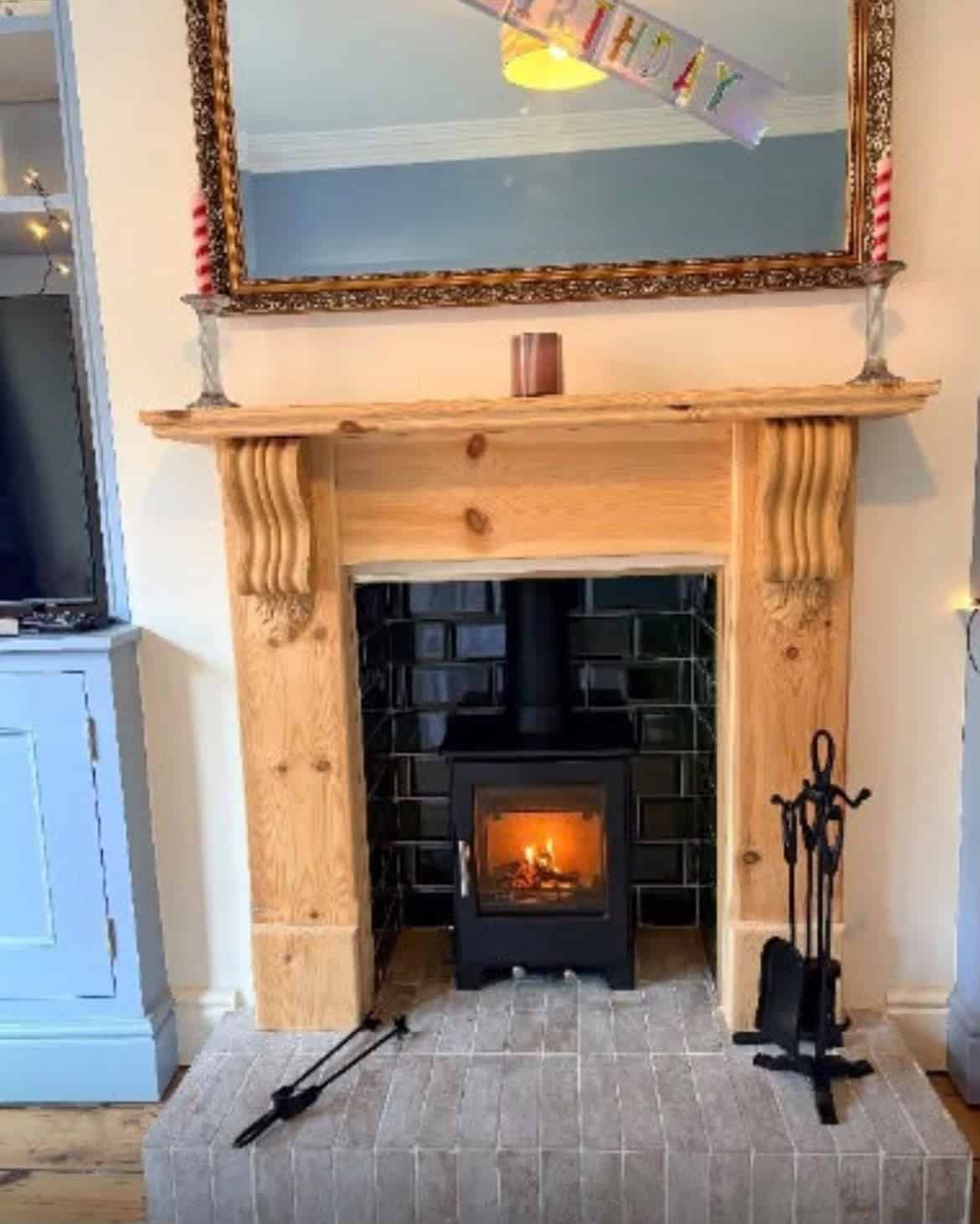
On this job, that meant the cement board went in first and the installers were happy with it. Only then did I tile the recess with dark green gloss metro tiles. They suit the black stove, and they reflect the glow of the fire beautifully once it’s lit. I then tiled the raised hearth with grey stone-effect brick-format tiles laid in a neat stacked pattern, which gives a clean, modern contrast with the dark recess. The customer’s pine surround finished the fireplace off nicely.
Tile choice matters as much as layout. Plain glazed ceramic and porcelain tiles like these are far more forgiving around a stove than delicate decorative or natural stone finishes, so check a tile’s suitability before you buy. Also leave the gaps your stove manufacturer specifies between the tiles and the appliance, because the recess will expand and contract every time the stove is lit.
Why Heat-Resistant Tile Adhesive and Grout Matter
Every time a stove is lit, the recess heats up and expands. When the fire dies down, it cools and contracts. Standard tile adhesive and grout aren’t built for that cycle. Over time they weaken, and tiles can loosen or even pop off the wall. It’s one of the most common reasons a tiled fireplace fails, and it often doesn’t show up until months after the job is finished.
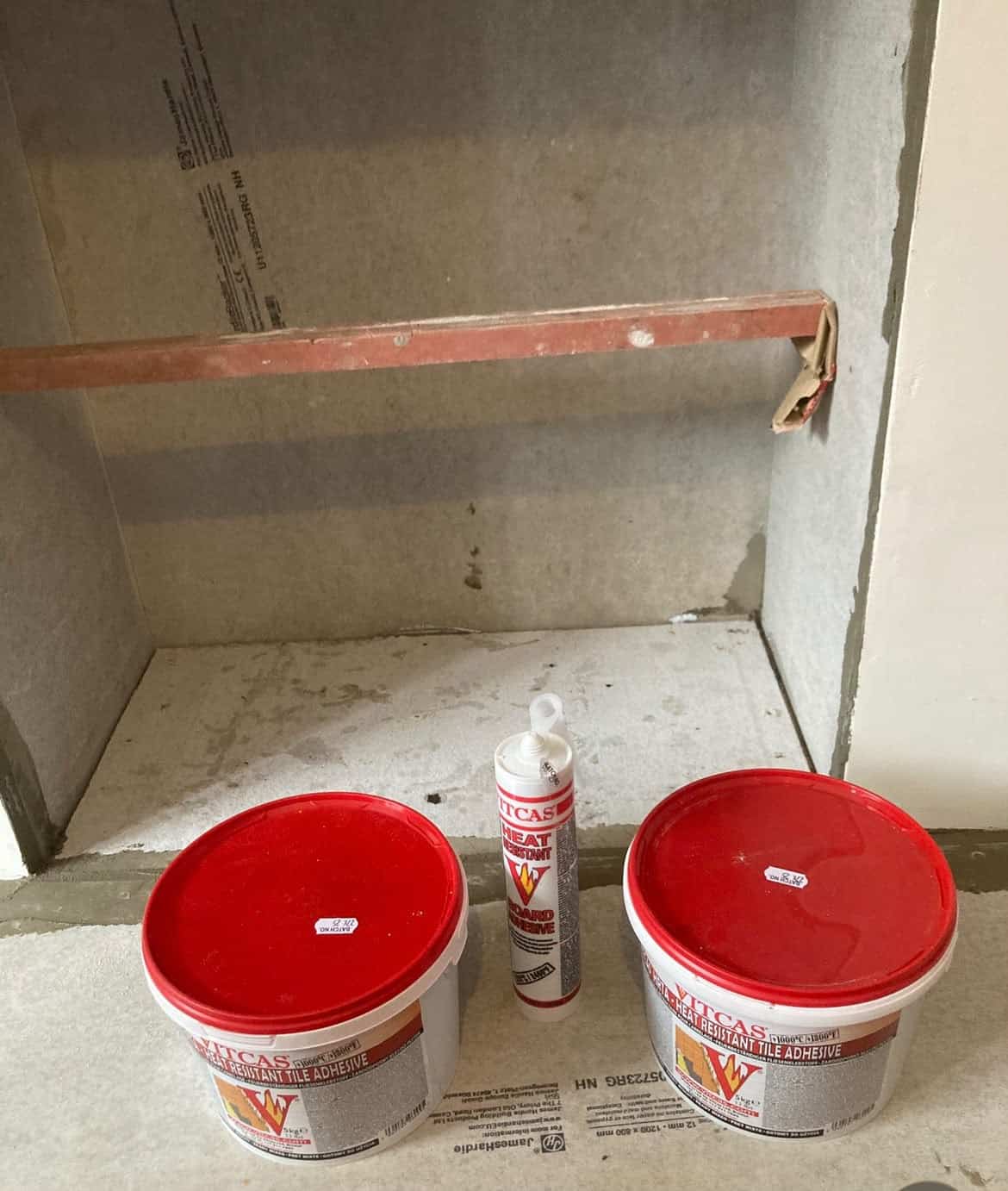
That’s why I used Vitcas heat-resistant tile adhesive, which is rated up to 1,000°C on the tub, along with a heat-resistant grout. It’s also important to follow the manufacturer’s instructions for mixing, application and curing before the stove is lit. Two things are worth knowing:
- You need both. Upgrading the adhesive but not the grout leaves a weak point, because the grout lines are exposed to the same heat and movement as the tiles.
- They’re hard to find. Most tile shops don’t stock heat-resistant products, so many tilers never use them, and homeowners rarely know to ask. If your tiler is planning to use standard adhesive around a log burner, question it.
Why the Right Tools and Materials Matter
This job is a good example of something I care about: you can only do good work with the right kit. I’m always upgrading my tools and materials, because better equipment means a better finish and fewer problems for the customer down the line.
Online shopping helps a lot. Amazon can be a great source for specialist items, and it’s where I recently found the heat-resistant adhesive and grout for this job, which are hard to source locally. While I was there, I also picked up:
- Diamond-tip drill bits in a range of sizes, for drilling hard tiles like porcelain cleanly, without cracking them
- A new ruler for marking out angles, because very few rooms have truly square corners, and accurate angles make for tighter cuts and neater finishes
None of it is glamorous, but it’s the difference between a job that looks right on day one and one that still looks right in ten years. A customer shouldn’t have to worry about what’s in my toolbox, and I’d always rather spend on the right product than go back to fix a problem. It’s a big part of how I work: the right kit first, then the job.
What to Check Before Tiling Around a Wood Burner
If you’re planning a log burner installation, a few simple checks can save you what this customer went through:
- Talk to your stove installer first. Ask what they need to see before they’ll sign the job off, and do it before any boarding or tiling starts. Use a HETAS-registered installer where you can.
- Use non-combustible board, such as cement board, and never plasterboard. Ask your tradesperson exactly which board they plan to use.
- Use heat-resistant adhesive and grout, rated for stove temperatures, not just one or the other.
- Choose suitable tiles. Ask before you buy, as some decorative tiles cope with heat better than others.
- Check the hearth as well as the recess. It needs to meet the regulations too, so don’t assume it’s covered.
For the legal detail, Approved Document J on gov.uk sets out the building regulations for combustion appliances in England.
Can you tile inside a fireplace recess for a log burner?
Yes, provided the recess is lined with non-combustible board and you use heat-resistant adhesive and grout. Check the plan with your stove installer before work starts.
Can you tile onto plasterboard behind a wood burner?
No. Plasterboard isn’t suitable around a solid fuel stove, and installers may refuse to fit the appliance, as this customer found. Use cement board or another non-combustible board instead.
Do I need special adhesive for a log burner fireplace?
Yes. Standard adhesive can fail with repeated heating and cooling, so use a heat-resistant adhesive and grout. They cost more and take more effort to source, but they’re far cheaper than retiling.
Can you tile a hearth for a log burner?
Yes, on a suitable non-combustible base. I did exactly that on this job, using a raised hearth of cement board and stone-effect tiles.
Need Your Fireplace Tiled for a Log Burner in Sheffield?
I tile fireplaces, hearths and walls around log burners across Sheffield, and I also cover Chesterfield and the surrounding areas. Whether your installation has stalled because of the wrong materials, or you’re planning a new stove and want the tiling done right first time, I can help.
Call 07960362959 or request a free quote and I’ll talk you through the right board, adhesive and tiles for your fireplace before any work begins.